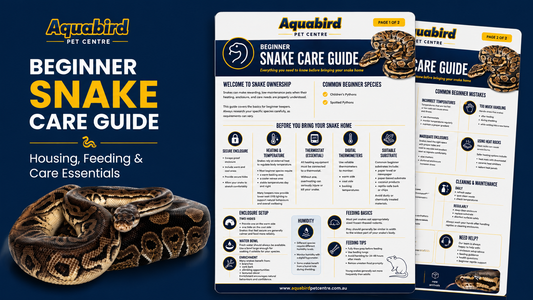

Beginner Snake Care Guide: Everything You Need to Know Before Bringing a Snake Home

Share
Thinking about getting your first pet snake? Here's everything you need to know about enclosure setup, heating, feeding, handling and ongoing care.
Snakes are one of the most rewarding reptile pets for beginner keepers. They are generally quiet, clean, and low maintenance compared to many traditional pets. However, their care requirements are very different from mammals and birds.
Providing the correct enclosure, heating, humidity, and feeding routine from day one is essential for keeping your snake healthy and thriving.
In this guide, we'll cover the basics of beginner snake care and help you prepare before bringing your new snake home.
Do You Need a Licence?
In Queensland, a Recreational Wildlife Licence is required to keep most native reptile species, including pythons. Always check current licensing requirements before purchasing your new reptile.

Choosing a Beginner-Friendly Snake
Not all snake species are suitable for first-time keepers.
Some of the most popular beginner snakes available in Australia include:

Children's Python
Children's Pythons are often considered one of the best beginner reptiles.
They are:
-
generally calm and easy to handle
-
relatively small compared to many pythons
-
adaptable to captivity
-
excellent feeders

Spotted Python
Spotted Pythons are another fantastic beginner choice.
They are:
-
hardy and resilient
-
active and interesting to observe
-
manageable in size
-
suitable for most beginner reptile keepers
Before purchasing any reptile, always research the specific species you intend to keep, as care requirements can vary.
Setting Up the Right Enclosure
Your snake's enclosure is one of the most important parts of its care.
A suitable enclosure should:
-
be completely escape-proof
-
provide secure hiding places
-
allow a temperature gradient
-
include enough room for the snake to stretch comfortably
Snakes feel most secure when they have places to hide. A stressed snake is more likely to refuse food and display defensive behaviour.

Heating and Temperature Requirements
Unlike mammals, snakes cannot regulate their own body temperature.
They rely on external heat sources to warm themselves and digest food properly.
Most beginner snake species require:
-
a warm basking area
-
a cooler retreat area
-
stable temperatures during both day and night
Without correct heating, snakes can develop health problems, struggle to digest meals, and become stressed.
Why a Thermostat Is Essential
Every heat source should be connected to a thermostat.
This is one of the most important pieces of reptile equipment you can purchase.
A thermostat helps:
-
prevent overheating
-
maintain stable temperatures
-
protect your snake from burns
-
improve enclosure safety
Running heating equipment without a thermostat can result in serious injury or death.

Monitoring Temperatures
Even when using a thermostat, temperatures should be checked regularly.
Digital thermometers allow you to monitor:
-
warm-side temperatures
-
cool-side temperatures
-
basking temperatures
Monitoring multiple areas ensures your snake always has access to the temperatures it needs.
Choosing the Right Substrate
Substrate is the material used on the floor of the enclosure.
Suitable beginner substrates include:
-
paper towel
-
newspaper
-
paper-based reptile bedding
-
coconut products
-
reptile-safe bark or chips
Avoid dusty, scented, or chemically treated materials.
The best choice often depends on your snake species and personal preference.
Creating a Comfortable Enclosure
Provide Two Hides
A basic setup should include:
-
one hide on the warm side
-
one hide on the cool side
This allows your snake to feel secure while still regulating its body temperature.
Fresh Water
Clean water should always be available.
Use a water bowl large enough for soaking if appropriate for your species.
Enrichment
Snakes benefit from more than just a hide box and water bowl.
Consider adding:
-
branches
-
cork bark
-
climbing opportunities
-
textured décor
Enrichment encourages natural behaviours and can improve confidence.
Understanding Humidity
Different snake species require different humidity levels.
Humidity should be monitored using a digital hygrometer.
Many snakes also benefit from a humid hide during shedding.
Maintaining correct humidity can help prevent:
-
incomplete sheds
-
retained eye caps
-
dehydration
Feeding Your Snake
Most pet snakes eat appropriately sized frozen-thawed rodents.
As a general guide, prey should be similar in width to the widest part of your snake's body.
Frozen-thawed prey is safer than live feeding and is recommended by most reptile keepers and veterinarians.
Feeding Tips
-
fully thaw prey before feeding
-
use feeding tongs
-
remove uneaten food promptly
-
avoid handling for 24–48 hours after feeding
Young snakes generally eat more frequently than adults.

Bringing Your New Snake Home
Moving to a new environment can be stressful for any reptile.
When you first bring your snake home, it may:
-
hide more than usual
-
refuse food temporarily
-
appear nervous or defensive
Give your snake time to settle into its new environment before attempting regular handling.
Where possible, wait until it has taken its first successful meal before beginning handling sessions.
Handling Your Snake Safely
Most snakes become more confident with calm, consistent handling.
When handling your snake:
-
move slowly and confidently
-
support the body properly
-
avoid sudden movements
-
avoid grabbing near the head
Short, positive handling sessions are usually more successful than long or frequent sessions.
Common Beginner Mistakes
Incorrect Temperatures
Temperature issues are one of the most common causes of reptile health problems.
Always:
-
use a thermostat
-
monitor temperatures regularly
-
research your species carefully
Excessive Handling
Avoid excessive handling:
-
immediately after feeding
-
during shedding
-
while your snake is settling into a new home
Bare Enclosures
A good enclosure should provide:
-
multiple hiding places
-
visual security
-
enrichment opportunities
-
naturalistic features
Using Heat Rocks
Heat rocks can cause serious burns.
Safer alternatives include:
-
thermostat-controlled heat mats
-
ceramic heat emitters
-
radiant heat panels

Understanding Shedding
Signs your snake may be preparing to shed include:
-
dull colours
-
cloudy eyes
-
increased hiding
-
reduced appetite
-
pink or dull belly scales
During shedding:
-
minimise handling
-
maintain appropriate humidity
-
provide rough surfaces for rubbing
Health Warning Signs
Contact a reptile veterinarian if you notice:
-
wheezing
-
bubbles around the mouth
-
stuck shed
-
mites
-
swelling or injuries
-
unusual lethargy
-
refusal to eat over an extended period
-
retained eye caps
-
significant weight loss
Early intervention often leads to better outcomes.

Snakes Are a Long-Term Commitment
Many commonly kept pet snakes can live for 15–30 years or more.
Before bringing a snake home, consider:
-
ongoing feeding costs
-
heating and electricity costs
-
enclosure upgrades
-
long-term care requirements
A snake can be a decades-long commitment.
Beginner Snake Care Checklist
- Escape-proof enclosure
- Thermostat connected to all heat sources
- Digital thermometer
- Appropriate substrate
- Warm hide
- Cool hide
- Water bowl
- Species-appropriate humidity
- Frozen-thawed food source
- Wildlife licence (where required)
Need Help Choosing Your First Snake?
Keeping snakes can be an incredibly rewarding experience when their environmental and husbandry needs are met. By choosing a suitable species, providing correct heating and enclosure setup, and taking the time to learn proper care techniques, you'll be well on your way to enjoying many years with your new reptile companion.
If you're unsure where to start, the Aquabird team can help you choose a beginner-friendly species, select the right equipment, and set up an enclosure that supports your snake's long-term health and wellbeing.