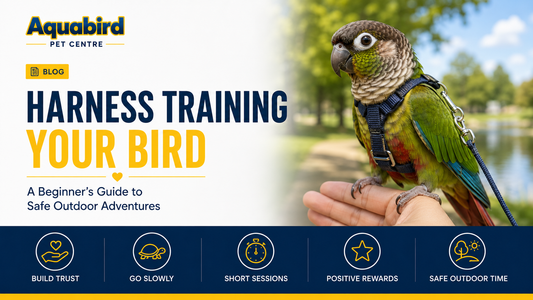

Harness Training Your Bird: A Beginner’s Guide to Safe Outdoor Adventures

Share
Want to teach your bird to wear a harness? Learn how to introduce a bird harness slowly, build trust, avoid common mistakes, and help your bird feel safe and confident.
Harness training can be a wonderful way to give your bird safe access to the outdoors, fresh air, sunshine and new experiences.
However, harness training needs to be done slowly, positively and with your bird’s comfort as the priority. Birds are sensitive, intelligent animals, and rushing the process can quickly create fear, stress or a lasting negative association with the harness.
With patience, consistency and the right approach, many birds can learn to accept a harness comfortably.
Can You Harness Train a Bird?
Yes, many companion birds can be harness trained.
Species commonly trained to wear a harness include:
-
Cockatiels
-
Conures
-
Quakers
-
Ringnecks
-
Amazons
-
Cockatoos
-
Macaws
-
Other handraised parrots
That said, every bird is different. Some birds take to harness training quickly, while others need weeks or months of slow introduction. Some birds may never feel comfortable wearing a harness, and that is okay too.
The goal is not to force your bird to wear a harness. The goal is to help your bird feel safe, confident and willing to participate.
Why Harness Train Your Bird?
A properly fitted bird harness can allow your bird to safely enjoy time outside while staying secure.
Harness training may allow your bird to experience:
-
fresh air
-
natural sunlight
-
supervised outdoor time
-
new environments
-
mental stimulation
-
stronger bonding with their owner
Outdoor time can be enriching, but it also comes with risks. A bird should never be taken outside without being safely contained in a secure cage, carrier or correctly fitted harness.
Even birds with clipped wings can become startled and fly further than expected.
Is Harness Training Safe for Birds?
Harness training can be safe when done correctly.
The most important safety rules are:
-
use a purpose-made bird harness
-
choose the correct size for your bird
-
introduce the harness slowly
-
never force the harness onto your bird
-
never leave a harnessed bird unattended
-
always supervise outdoor time
-
check the harness fit before every use
Never attach a lead to a leg ring, collar, wing clip, homemade loop or anything not specifically designed as a bird harness. Birds have delicate bodies, and unsafe equipment can cause serious injury.
Before You Start Harness Training
Before introducing the harness, your bird should already have some trust in you.
It helps if your bird is comfortable with:
-
taking treats from your hand
-
stepping up
-
being near your hands
-
short training sessions
-
gentle handling around the head, wings and body
If your bird is still very nervous, settling into a new home, biting defensively or avoiding hands, focus on trust-building first.
Harness training works best when your bird already feels safe with you.
Find Out What Motivates Your Bird
Before training begins, work out what your bird finds rewarding.
This might be:
-
millet
-
sunflower seeds
-
small pieces of fruit
-
a favourite toy
-
head scratches, if your bird enjoys them
-
verbal praise
-
attention from a favourite person
Training becomes much easier when your bird has a clear reason to participate.
For many birds, tiny food rewards work best because they are quick, positive and easy to repeat.
Keep Harness Training Sessions Short
Short, positive sessions are much better than long, frustrating ones.
Aim for sessions that are:
-
calm
-
consistent
-
reward-based
-
only a few minutes long
Training at around the same time each day can help build routine, but your bird’s mood matters more than the clock.
If your bird becomes frightened, stressed, overwhelmed or starts trying to escape, stop the session and go back to an easier step next time.
Ending on a positive note is far better than pushing too far.
Step 1: Let Your Bird See the Harness
Start by allowing your bird to simply notice the harness from a distance.
Do not move it toward them straight away.
Place the harness nearby while offering treats and praise. Your bird does not need to touch it at first. The goal is simply for them to learn that the harness is not scary.
If your bird stays calm, reward them.
If they move away, freeze, lean back or show fear, increase the distance and make the step easier.
Step 2: Make the Harness Part of Playtime
Once your bird is comfortable seeing the harness, begin making it part of a positive routine.
You can:
-
hold the harness while offering treats
-
place it near favourite toys
-
allow your bird to investigate it
-
reward curiosity
-
let them gently touch or mouth the harness
The harness should become familiar and boring, not something sudden or alarming.
Never punish your bird for being unsure. Fear is communication, not misbehaviour.
Step 3: Help Your Bird Get Used to Touch
Before your bird wears a harness, they need to be comfortable with gentle touch around the areas the harness will contact.
This may include:
-
head
-
neck
-
shoulders
-
wings
-
chest
-
back
Go slowly and reward calm behaviour.
Some birds are naturally comfortable being touched, while others need a lot more time. Respecting your bird’s body language at this stage will make the whole process easier later.
Step 4: Practise the Head Loop
For many birds, the head loop is the hardest part of harness training.
Start by teaching your bird to voluntarily put their head toward or through the loop.
You can use a treat to encourage them to move forward, but never shove the loop over their head.
Reward tiny steps, such as:
-
looking at the loop
-
touching the loop
-
putting their beak near the loop
-
putting part of their head through
-
calmly allowing the loop around their neck
This stage may take days or weeks. That is completely normal.
Step 5: Introduce the Wings and Body Straps
Once your bird is comfortable with the head loop, you can slowly introduce the rest of the harness.
Work gradually around the wings and body.
At this stage, focus on:
-
calm handling
-
gentle movements
-
lots of rewards
-
removing the harness before your bird becomes distressed
Do not clip or tighten the harness until your bird is comfortable with the harness touching their body.
Step 6: Clip the Harness for Short Periods
When your bird is relaxed with the harness being placed on their body, you can begin clipping it up briefly.
Start with very short periods.
For example:
-
5 seconds
-
10 seconds
-
30 seconds
-
1 minute
Reward your bird while the harness is on, then remove it calmly.
Slowly increase the time only when your bird remains comfortable.
Step 7: Practise Indoors First
Before taking your bird outside, practise indoors.
Allow your bird to wear the harness while:
-
sitting with you
-
stepping up
-
moving between rooms
-
calmly exploring familiar areas
Your bird should be relaxed, responsive and comfortable wearing the harness before outdoor use.
If your bird panics indoors, they are not ready to go outside.
When Is My Bird Ready to Go Outside?
Your bird may be ready for outdoor harness time when they can:
-
wear the harness calmly
-
move comfortably while wearing it
-
step up reliably
-
remain responsive to you
-
avoid chewing or fighting the harness
-
stay relaxed in new environments
For the first outdoor session, keep it short and quiet.
Choose a calm, safe area away from:
-
dogs
-
cats
-
wild birds
-
loud machinery
-
roads
-
large crowds
-
extreme heat or cold
Outdoor time should always be supervised closely.
Common Harness Training Mistakes
Moving Too Fast
Rushing is one of the biggest reasons harness training fails.
If your bird becomes scared, go back to an easier step.
Forcing the Harness On
Forcing a harness onto a bird can damage trust and create long-term fear.
Harness training should always be voluntary and reward-based.
Training for Too Long
Long sessions can lead to frustration and stress.
Short, successful sessions are far more effective.
Taking Your Bird Outside Too Soon
A bird should not go outside in a harness until they are completely comfortable wearing it indoors.
Using the Wrong Harness Size
A harness that is too loose may allow escape. A harness that is too tight may restrict movement or cause discomfort.
Always choose the correct size and check the fit carefully.
What If My Bird Does Not Like the Harness?
Not every bird will accept a harness, and that does not mean you have failed.
Some birds are more sensitive to touch, more fearful of new objects, or less comfortable with body handling.
If harness training is causing ongoing stress, consider other safe ways to provide enrichment, such as:
-
indoor flight time
-
supervised play stands
-
outdoor aviary time
-
secure travel cages
-
window perches
-
foraging activities
Your bird’s wellbeing matters more than the goal of getting the harness on.
Harness Training Takes Patience
Harness training your bird can be incredibly rewarding, but it should never be rushed.
The best results come from:
-
patience
-
consistency
-
positive reinforcement
-
respecting your bird’s body language
-
keeping sessions short and fun
A calm, confident bird is much safer than a bird that has been pushed too quickly.
Take your time, celebrate small wins, and let your bird set the pace.
Need Help Choosing a Bird Harness?
At Aquabird Pet Centre, we are happy to help you choose suitable bird products, enrichment, toys and training supplies for your companion bird.
If you need advice on harness sizing, safe outdoor time, or helping your bird build confidence, visit us in-store or contact our team for support.