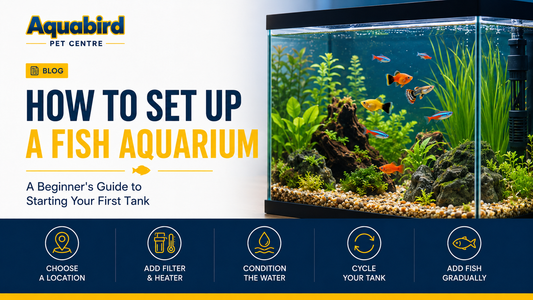

How to Set Up a Fish Aquarium: A Beginner's Guide to Starting Your First Tank

Share
Thinking about setting up your first aquarium? This beginner-friendly guide covers everything you need to know about choosing a location, cycling your tank, adding fish safely, and maintaining a healthy aquarium.
Keeping fish can be a rewarding and relaxing hobby, but setting up an aquarium correctly from the beginning is one of the biggest factors in long-term success.
Many problems new fish keepers experience, such as cloudy water, algae, or fish losses, can often be traced back to mistakes made during the initial setup.
This guide will walk you through everything you need to know before adding your first fish.
Choosing the Best Location for Your Aquarium
Where you place your aquarium matters more than many people realise.
Choose a location that is:
✅ On a sturdy, level surface
✅ Near power points for equipment
✅ Away from direct sunlight
✅ Easy to access for maintenance
Avoid placing your aquarium:
❌ In front of windows
❌ Near heating or cooling vents
❌ In areas with extreme temperature fluctuations
Direct sunlight can cause excessive algae growth and make water temperatures difficult to control.
Because aquariums become extremely heavy once filled, choose the location carefully before adding water.
Do You Need Foam Under an Aquarium?
Many aquariums benefit from a foam mat or polystyrene sheet underneath the tank.
This can:
- help compensate for minor imperfections in the stand
- reduce pressure points on the glass
- provide additional support
Always check the manufacturer's recommendations, as some modern aquariums are designed to sit directly on their cabinets.
Cleaning a New Aquarium Before Setup
Even brand-new aquariums should be cleaned before use.
Simply rinse the aquarium with:
- clean water
- a new sponge or cloth
Never use:
❌ Soap
❌ Detergents
❌ Household cleaners
Even tiny amounts of cleaning chemicals can be harmful to fish.
Choosing the Right Aquarium Substrate
Your choice of substrate depends on the type of aquarium you want to create.
For Planted Aquariums
A deeper substrate of around 4 cm or more is usually recommended.
For Fish-Only Aquariums
A shallower layer of substrate is often sufficient.
Always rinse gravel or substrate thoroughly before placing it into the aquarium to remove dust and debris.
Do Tropical Fish Need a Heater?
Most tropical fish require stable temperatures between approximately:
🌡️ 24°C–28°C
The ideal temperature will depend on the species you intend to keep.
When installing a heater:
- place it inside the aquarium according to manufacturer instructions
- position the thermometer on the opposite side of the tank
- never turn the heater on until it is fully submerged
As a general guide:
1 watt of heating per litre of water is often recommended.
Why Every Aquarium Needs a Filter
A filter is one of the most important pieces of equipment in your aquarium.
Filters help:
- remove waste particles
- support beneficial bacteria
- maintain water quality
- create water movement and oxygenation
Your filter should run continuously.
Turning filters off for extended periods can harm beneficial bacteria and reduce water quality.
Decorating Your Aquarium
Once your equipment is installed, it's time for the fun part.
Rinse all plants, decorations, and ornaments before placing them into the aquarium.
For a natural appearance:
- place taller plants toward the back
- position shorter plants toward the front
- create feature areas and hiding places
Decorations not only improve the appearance of your aquarium but also provide security and enrichment for your fish.
Adding Water to Your Aquarium
Fill the aquarium slowly to avoid disturbing the substrate.
If using tap water, add a quality water conditioner to remove chlorine and chloramine.
Water conditioners are essential because untreated tap water can harm fish and beneficial bacteria.
The Most Important Step: Cycling Your Aquarium
This is the step many beginners accidentally skip.
Before adding fish, your aquarium needs to establish beneficial bacteria that convert toxic waste products into safer compounds.
This process is called the nitrogen cycle.
Your goal is to achieve:
- Ammonia: 0 ppm
- Nitrite: 0 ppm
- Nitrate: low and manageable
Adding fish too quickly to a new aquarium can result in:
- ammonia poisoning
- stressed fish
- disease outbreaks
- fish losses
At Aquabird, we strongly recommend learning about aquarium cycling before purchasing your first fish.
When Can I Add Fish to My New Aquarium?
Once your aquarium is fully cycled, fish should be added gradually.
Avoid fully stocking the aquarium all at once.
Start with a few fish and:
- monitor water quality
- observe behaviour
- check compatibility
Gradually adding fish allows the beneficial bacteria to adjust to the increasing waste load.
How to Acclimate New Fish
Before releasing new fish:
- Float the bag in the aquarium for around 15–20 minutes.
- This allows the water temperatures to equalise.
- Release the fish gently into the aquarium.
Never leave fish in a hot car or direct sunlight.
How Often Should You Clean a Fish Tank?
Regular maintenance is the key to long-term success.
Weekly
- check equipment
- test water parameters
- remove algae if needed
Every One to Two Weeks
- perform a 25–30% water change
- vacuum debris from the substrate if required
Regularly
- trim plants
- inspect decorations
- replace evaporated water
Should I Clean My Filter Under Tap Water?
No.
Beneficial bacteria live inside your filter media.
When cleaning filter sponges or media:
✅ Use old aquarium water.
❌ Never rinse with chlorinated tap water.
Tap water can kill beneficial bacteria and disrupt your aquarium's biological filtration.
How Long Should Aquarium Lights Stay On?
Leaving lights on for too long is one of the biggest causes of algae problems.
As a general guide:
💡 6–8 hours per day is suitable for many aquariums.
Planted aquariums may vary depending on plant species and lighting intensity.
Common Beginner Aquarium Mistakes
Adding Fish Too Soon
Always cycle your aquarium first.
Overfeeding
Uneaten food can quickly affect water quality.
Overcrowding
More fish does not always mean a better aquarium.
Skipping Water Changes
Regular maintenance keeps your fish healthy.
Cleaning Everything At Once
Avoid replacing or cleaning all filter media at the same time.
Setting Up Your Aquarium for Success
A successful aquarium starts with patience.
Take your time:
✅ Choose the right location.
✅ Use quality equipment.
✅ Cycle your aquarium properly.
✅ Add fish gradually.
✅ Stay consistent with maintenance.
By getting the basics right from the beginning, you'll create a healthy, beautiful aquarium that you can enjoy for years to come.
Need Help Setting Up Your First Aquarium?
At Aquabird Pet Centre, we're passionate about helping people succeed in the aquarium hobby.
Whether you're setting up your very first tank, learning about cycling, choosing compatible fish, or troubleshooting water quality issues, our team is happy to help.
Visit us in-store or contact us for personalised aquarium advice.