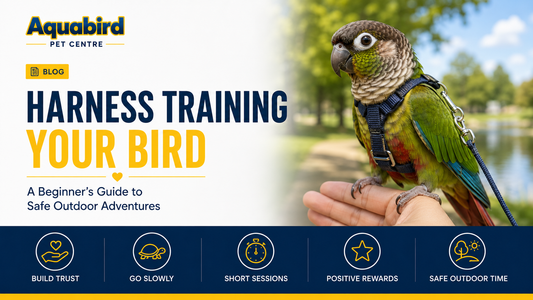

Beginner Handraised Bird Care Guide: Everything You Need to Know Before Bringing Your New Bird Home

Share
Bringing home a handraised bird for the first time? Learn how to help your new companion settle in, build trust, provide the right diet and enrichment, and create a happy lifelong bond.
Handraised birds can make incredible companions. They are intelligent, social, affectionate, and often form strong bonds with their families.
However, bringing a bird home is a major life change for them. Even a well-socialised handraised bird may feel nervous, overwhelmed, or uncertain in a new environment.
The first few weeks are often the most important. Understanding your bird's needs from the beginning can help build trust and set the foundation for a happy relationship that lasts for many years.
This guide covers the essentials of caring for a new handraised bird and helping them settle into their new home.
What Is a Handraised Bird?
A handraised bird is a bird that has been fed and cared for by people while growing up, rather than being raised exclusively by its parents.
Many popular companion birds are handraised, including:
- Cockatiels
- Budgies
- Conures
- Quakers
- Ringnecks
- Amazons
- Cockatoos
- Caiques
While handraised birds are generally more comfortable around people, every bird is still an individual with its own personality, preferences, and comfort levels.
Choosing the Right Cage for Your Bird
One of the most common mistakes new bird owners make is purchasing a cage that is too small.
Your bird's cage should provide enough space to:
- climb
- play
- stretch its wings
- move comfortably between perches
Look for a cage that includes:
- secure locking doors
- multiple perches
- food and water stations
- room for toys and enrichment
As a general rule, bigger is usually better.
What Perches Are Best for Pet Birds?
Perches play a major role in foot health and comfort.
A good cage setup should include:
- natural timber perches
- varying diameters
- multiple resting areas
- a comfortable sleeping perch
Avoid relying solely on smooth dowel perches, as they provide little variety for your bird's feet.
What Should I Feed My Pet Bird?
Nutrition is one of the most important aspects of bird ownership.
Most companion birds benefit from a balanced diet that includes:
- quality pellets
- fresh vegetables
- clean water daily
- healthy treats in moderation
Different species have different nutritional requirements, so always research the specific needs of your bird.
A poor diet can contribute to:
- obesity
- vitamin deficiencies
- behavioural issues
- shortened lifespan
Why Birds Need Toys and Enrichment
Birds are highly intelligent animals that require mental stimulation.
Without enough enrichment, birds can become:
- bored
- frustrated
- stressed
- destructive
Good enrichment options include:
- shredding toys
- foraging toys
- climbing opportunities
- chewing materials
- social interaction
Providing enrichment every day helps keep your bird physically and mentally healthy.
Where Should I Put My Bird's Cage?
Choosing the right location for your bird's cage can make a big difference to their wellbeing.
Place the cage:
- away from kitchens
- away from drafts
- away from aerosols and fumes
- in an area where the family spends time
Birds are social animals and generally enjoy being included in daily household activities.
My New Bird Seems Scared — Is This Normal?
Yes.
This is one of the most common questions new bird owners ask.
When first brought home, a bird may:
- sit quietly
- seem nervous
- avoid interaction
- refuse treats
- not want to step up
- call loudly
Moving to a new home can be overwhelming.
Many birds need days or even weeks before they feel fully comfortable.
Patience is one of the most important things you can offer during this adjustment period.
How Do I Bond With a New Bird?
Building trust takes time.
The strongest bird-owner relationships are built through positive, consistent interactions rather than forcing contact.
To help your bird feel comfortable:
- sit nearby regularly
- speak softly
- offer treats
- allow your bird to approach you
- respect their boundaries
Every positive interaction helps build confidence.
Should I Let My Bird Set the Pace?
Absolutely.
Many new owners are excited to interact with their bird immediately, but allowing the bird to choose when and how interactions occur often leads to better long-term results.
Instead of forcing handling:
- spend time nearby
- talk calmly
- offer favourite foods
- reward curiosity
Trust grows much faster when birds feel safe and in control.
How Long Should Bird Training Sessions Be?
Short sessions are usually best.
Keep training:
- positive
- reward-based
- enjoyable
- only a few minutes long
Small successes build confidence and help birds develop positive associations with learning.
Consistency is far more important than lengthy sessions.
What Treats Can I Use for Bird Training?
Many birds respond well to treats during training and bonding sessions.
Popular options include:
- millet
- sunflower seeds
- small pieces of fruit
- species-appropriate treats
Treats should complement a balanced diet rather than replace it.
Common Mistakes New Bird Owners Make
Buying a Cage That Is Too Small
Small cages can contribute to:
- stress
- boredom
- behavioural problems
- reduced activity
Choose the largest practical cage for your bird.
Feeding a Poor Diet
Seed-only diets often lack important nutrients.
A balanced diet supports long-term health and wellbeing.
Interrupting Sleep
Most companion birds require:
- 10–12 hours of uninterrupted sleep
Some species may benefit from even more.
Poor sleep can contribute to behavioural and health issues.
Not Spending Enough Time With Your Bird
Birds are social animals.
Daily interaction helps prevent:
- boredom
- loneliness
- behavioural problems
- stress
Signs Your Bird May Be Unwell
Contact an avian veterinarian if you notice:
- fluffed-up appearance
- loss of appetite
- tail bobbing
- breathing difficulties
- discharge from eyes or nostrils
- vomiting or regurgitation
- unusual droppings
- sudden weight loss
- unusual behaviour
- spending excessive time on the cage floor
Birds often hide illness, so early intervention is important.
Cleaning and Maintaining Your Bird's Environment
Daily
- replace food and water
- remove waste
- spot clean the cage
- inspect perches
Weekly
- clean perches
- wash toys
- wipe down cage surfaces
- inspect cage condition
Regularly
- deep clean the cage
- replace damaged toys
- inspect equipment for wear
- review diet and enrichment needs
A clean environment helps prevent illness and keeps your bird comfortable.
Handraised Birds Are a Long-Term Commitment
Many companion birds live for decades.
Depending on the species, lifespan can range from:
10–80+ Years
Before bringing a bird home, consider:
- food costs
- veterinary care
- enrichment requirements
- training time
- long-term commitment
A bird can become a cherished family member for much of your life.
Need Help Choosing or Caring for a Bird?
At Aquabird Pet Centre, we love helping people succeed with their birds.
Whether you're choosing your first companion bird, setting up a cage, selecting toys and enrichment, or learning how to build trust with a new bird, our team is happy to help.
Visit us in-store or contact us for personalised advice and support.